
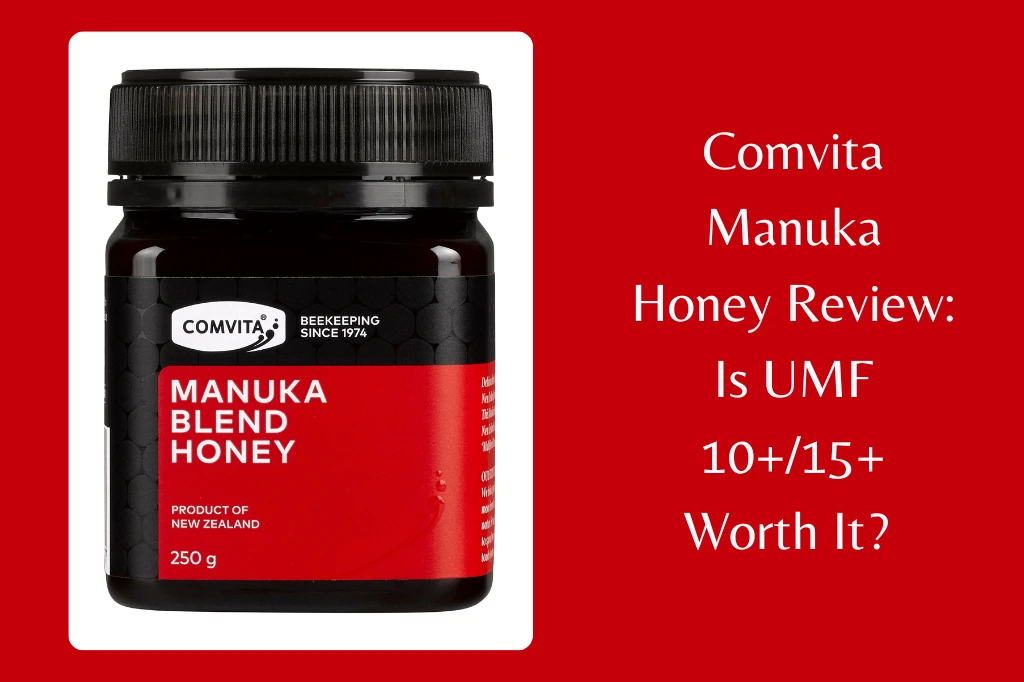
Comvita’s UMF 10+ and UMF 15+ are both certified grades, but which one is worth it depends on your budget, intended use, and taste preference. This review compares Comvita’s published certification details, current retail pricing, and packaging information for both tiers. The tasting section below reflects a planned first-hand comparison that still needs to actually happen before this page can be called a completed review.
What I Bought and Why
The plan for this review is to buy a Comvita UMF 10+ (250g) and a UMF 15+ (250g) at retail, not sent by the brand, specifically to compare the price jump between tiers against what you actually get for it. Comvita has been in this category since 1974, which makes it a reasonable first full review for this site, it’s one of the most recognized names in Manuka honey, and recognition alone isn’t a reason to skip the verification step below.
The UMFHA and Batch Certificate Check
The UMF Honey Association lists Comvita Ltd under license number 1019. That confirms Comvita’s UMF license listing as a company, it doesn’t by itself authenticate any individual jar, so it’s a starting point, not a substitute for checking the specific jar, its lot number, and its batch documentation.
For whichever specific jars are purchased, the next step is matching each one’s lot or batch number against its own batch certificate, checking the MGO and UMF values printed on the jar against what the certificate actually reports for that batch. If that certificate also lists DHA and leptosperin readings, those results belong to that specific batch, not to every Comvita jar sold under the same UMF number. Our full verification methodology covers how this check is actually done.
Taste and Texture
The plan is to taste both side by side and describe them in first-person, subjective terms, something like “in my tasting, the UMF 10+ seemed milder and more floral, while the UMF 15+ had a stronger savory note and longer finish,” rather than presenting either description as a universal fact about how every jar of that grade tastes.
Price: What I Actually Paid (and What It Costs Elsewhere)
At the time checked, Comvita’s US site listed UMF 15+ from $56.99 and UMF 10+ from $34.99, both for the 250g/8.8oz size, in US dollars, before any shipping or tax. That collection uses “from” pricing, so confirm the exact size selected before comparing.
| Product | Listed Price | Weight | Price per Gram |
|---|---|---|---|
| Comvita UMF 10+ | $34.99 | 250g | $0.140 |
| Comvita UMF 15+ | $56.99 | 250g | $0.228 |
A Walmart Business listing showed Comvita UMF 15+ (250g) from $52.49 when checked, though Walmart itself notes prices can vary online, in stores, and in the app, so verify the seller, size, and fulfillment details before treating that as a retailer-wide figure.
A third-party warehouse-price tracker reported $17.89 for a 17.6oz Comvita UMF 12+ item at Costco on a single dated check. That’s not the same grade as the UMF 10+ or 15+ jars this review is about, and it isn’t a current Costco product-page price, Costco doesn’t publish price online, so treat it as channel context rather than a like-for-like comparison, and confirm directly with a specific Costco location before relying on it. Price per gram is still the right number to compare once different jar sizes are involved, calculate it directly for whatever specific listings you’re weighing against each other.
Which Tier Should You Buy: UMF 10+ or UMF 15+?
For tea, toast, or general food use, the plan is to prefer the lower-priced UMF 10+, on the basis that its flavor should be sufficient for that kind of everyday use. A higher UMF rating doesn’t automatically make a jar better for every use case, that’s a preference and a price question, not a potency argument.
UMF 15+ is the one to reach for specifically if the stronger flavor itself is the point, or if a higher certified grade matters to you for its own sake. This is meant to be a personal recommendation based on actual tasting and actual use, once that tasting happens, not a universal buying rule.
Packaging and Practical Notes
Comvita’s UMF jars are sold in glass with a screw-top lid.
Comvita’s site listed a UMF 10+ three-pack at $94.47 against a crossed-out $104.97, a 10% saving at the time checked, confirm the current price and shipping terms before citing this. Comvita says it has more than 40,000 hives and works with beekeepers, that’s a real scale claim worth knowing, though it isn’t the same as saying the company owns all 40,000 hives itself, and scale by itself isn’t proof of better taste, authenticity, or value.
Comvita says its UMF Manuka honey is traceable from hive to shelf. That’s a company claim, worth noting as such rather than treating it as independently audited fact.
The Verdict
Comvita’s UMFHA license checks out as a real, current listing, which is the baseline this review is built on. Once the actual jars are purchased, tasted, and batch-checked, this section needs to state plainly whether both tiers held up to that check and which one is the better buy for daily use versus occasional, stronger-flavor use, based on what was actually found, not on the plan described above. See how Comvita ranks against every brand we’ve tested if you’re deciding between brands rather than just tiers.
FAQ
How does Comvita compare to Manukora?
Both brands publish authenticity and quality information, but they foreground different systems, Comvita emphasizes UMF certification, while Manukora commonly leads with MGO results and its own batch-level traceability tools. These aren’t identical grading systems, so see how Comvita compares directly to Manukora tier by tier rather than treating the two labels as direct equivalents.
Is Comvita’s supply chain actually traceable?
Comvita says its UMF Manuka honey is traceable from hive to shelf. The UMF license confirms the company’s certification status, and a batch certificate can help verify a specific jar if its lot number matches, but that check needs to happen on the actual jar in hand, not assumed from the brand’s general claim.
Would I buy Comvita again?
That answer depends on the jars actually purchased and tasted for this review, once that happens, this section should state plainly which tier earned a repeat purchase and why, based on those specific jars, not a guarantee that every batch tastes identical.