
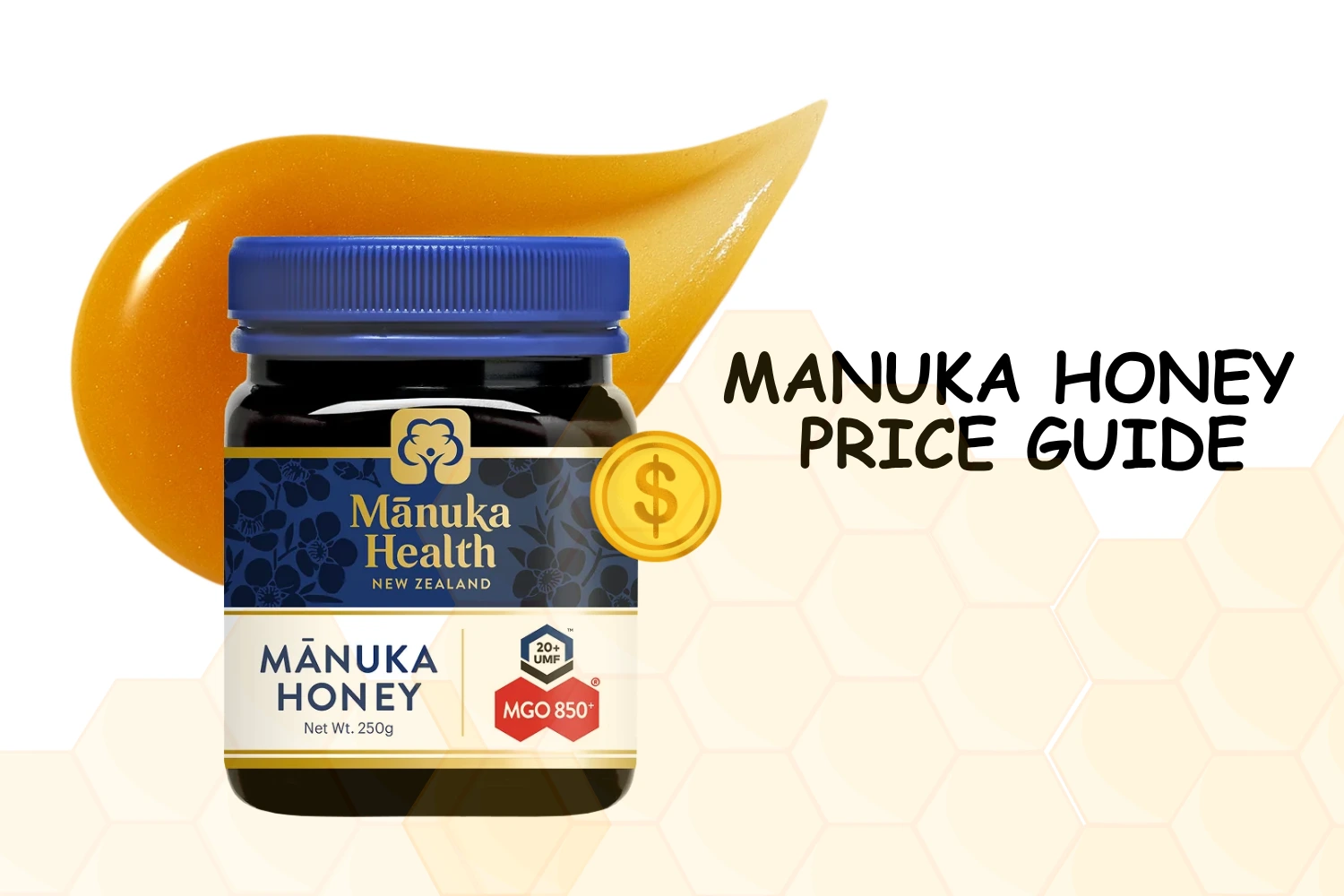
A 250g jar of entry-tier Manuka (UMF 5+ to 10+) typically runs $23 to $35 in 2026. Mid-tier (UMF 15+ to 16+) runs $45 to $60. Premium tier (UMF 20+ and up) spans $80 to $130 or more, depending on the brand and where you buy it.
How We Built These Price Bands
Every price below is checked against real, current 2026 retail listings, direct brand sites, Walmart, Target, Costco, and Amazon, standardized to the 250g (8.8oz) jar size so brands and grades actually compare apples to apples. Comvita and Manukora anchor most of these bands specifically, since both publish their full grade lineup with consistent, checkable pricing across multiple retailers rather than a single listing that could be an outlier. Where a listing showed active sale pricing rather than full price, that’s noted explicitly below rather than blended into a single misleading average.
Price per gram is the more useful number than price per jar once you’re comparing across brands, since jar sizes aren’t perfectly standardized across every listing. A $57, 250g jar works out to about 23 cents a gram, while the same brand’s 500g jar often works out cheaper per gram despite costing more upfront. Keep that math in mind as prices below shift between the 8.8oz standard and occasional 4.4oz or 17.6oz listings. If you’re still getting oriented on what UMF and MGO numbers actually mean before comparing prices against them, the full UMF, MGO, KFactor, and NPA comparison is worth a look first.

Price Bands by Grade (250g / 8.8oz Standard)
Entry Tier: UMF 5+ to UMF 10+ (MGO 83+ to 263+)
Real range: roughly $23 to $35. Comvita’s UMF 5+ (MGO 83+) has been listed in the low-to-mid $20s across major US retailers, and UMF 10+ (MGO 263+) has run in the high-$20s to low-$30s depending on the retailer and any active sale pricing. These are single-snapshot figures from research, not a purchase receipt, treat the exact dollar amount as approximate until confirmed against an actual dated purchase. This is meaningfully lower than a rough estimate based on tier positioning alone would suggest, actual entry-tier listings check in tighter and cheaper than you might expect once you look at real current prices rather than working backward from the mid-tier number.
This is also the tier where you’ll see the most brand variety at a similar price point. Y.S. Eco Bee Farms and other established organic raw honey brands sit adjacent to this range too, though those aren’t UMF-graded Manuka at all, worth remembering when a search turns up a cheap “Manuka-style” jar that isn’t actually certified.
Mid Tier: UMF 15+ to UMF 16+ (MGO 514+ to 600+)
Real range: roughly $45 to $60. Comvita’s UMF 15+ (MGO 514+) lists around $57 at full price, though it’s shown up on sale as low as $45-53 at Walmart. Manukora’s comparable MGO 600+ jar runs close to $55, this is the tier a UMF conversion table would place at roughly UMF 16+, but it’s worth knowing Manukora removed UMF numbers from their actual product labels in 2022 and now displays MGO only, even though the company remains UMFHA certified overall. If you’re comparing a Manukora jar’s MGO number against a UMF number on another brand’s label, that’s an equivalence, not something printed on the Manukora jar itself. This is the tier where the jump from entry-level really shows up, roughly double the entry tier’s price for meaningfully more MGO, and it’s the tier most buyers researching a graded jar for daily use actually land on.
Comvita also sells an UMF 18+ (MGO 696+) step between this tier and the premium one below, priced accordingly in between, worth checking directly if 15+ feels like not quite enough and 20+ feels like overkill for your use case.
Premium Tier: UMF 20+ and Above (MGO 829+ and up)
Real range: roughly $80 to $130, with real variation by brand. Manukora’s MGO 850+ jar (the rough UMF 20+ equivalent, per the labeling note above) runs around $80. Comvita’s UMF 20+ (MGO 829+), bought direct from their own site, has listed in the $110-130 range depending on whether a subscription discount is applied. That’s a real, verified gap between two legitimate, UMFHA-affiliated brands at essentially the same potency, not a sign one of them is wrong, more on why that variance exists below. As with the entry tier, treat the specific dollar figures as a researched starting point to confirm against an actual current listing or receipt, not a locked-in number.

Price Bands by Grade (250g / 8.8oz Standard)
| Tier | UMF Grade | MGO Equivalent | Price Range (250g) | Example Brand |
|---|---|---|---|---|
| Entry | UMF 5+ to 10+ | MGO 83+ to 263+ | $23-$35 | Comvita |
| Mid | UMF 15+ to ~16+ | MGO 514+ to 600+ | $45-$60 | Comvita, Manukora |
| Premium | UMF 20+ and up | MGO 829+ and up | $80-$130+ | Manukora, Comvita |
Some brands push past UMF 20+ entirely, Comvita’s UMF 25+ (MGO 1200+) sits at the very top of their lineup and prices accordingly higher still. See how the top brands compare beyond price if grade and price alone aren’t the whole picture you’re weighing.
Why Price Scales So Steeply With Grade
Higher UMF and MGO tiers require rarer, more selective harvests to hit the certified threshold, and more of the honey from a given harvest ends up graded lower rather than higher. That scarcity, not just a markup, is most of what you’re paying for at each step up. Why the same grade can cost $30-80 more at different retailers goes deeper than this hub covers.
Why Some Prices Are Too Low to Trust
A price meaningfully below these bands for a stated grade is worth real suspicion, not excitement. Legitimate UMF or MGO testing and certification puts a practical floor under what a genuine jar at a given grade can cost, so a UMF 15+ jar priced like an entry-tier one is a signal to check the listing closely, not a lucky find. When a price is too low to be a real jar covers the specific red flags to check for on a suspiciously cheap listing.
Where to Buy at the Best Price
Prices for the same jar can vary noticeably between Amazon, a brand’s own site, and a warehouse retailer like Costco, sometimes by $10 or more on an identical jar. Which channel is actually cheapest depends on the specific brand and grade you’re after. Here’s where to actually buy without overpaying, broken down by channel.
Can a Subscription or Bigger Jar Lower Your Cost?
Manukora’s subscribe-and-save option reportedly cuts around 20% off their listed price, and Comvita offers a comparable subscription discount on their own site. Whether a subscription or a larger jar size actually saves you money over a year depends on how much you’d realistically use. Here’s whether a subscription or bigger jar lowers your annual cost, walked through with the actual math.
Which Grade Is Actually Worth Buying?
The right grade depends entirely on how you’re using it, daily diluted use, undiluted or targeted use, or general table honey, not just “buy the highest number you can afford.” Here’s which grade actually makes sense for your use case, matched to real scenarios rather than a blanket recommendation.
FAQ
Are these prices for raw honey or all Manuka honey?
These bands are specifically for genuine, UMF or MGO-certified Manuka honey at the stated grades, not general raw or wildflower honey, which runs considerably cheaper across the board, typically $15-25 for a comparable jar size. A jar labeled Manuka without a real grade certification behind it shouldn’t be compared against these bands at all, since you’re not actually comparing like for like.
Do prices differ much between US retailers?
Yes, sometimes by $10 or more on the identical jar, as shown in the premium tier’s real gap between Manukora and Comvita’s direct pricing above. Costco and Target sometimes carry the same certified jars at different price points than Amazon or a brand’s own site, occasionally with warehouse-club pricing beating everything else. Checking two or three retailers before buying is worth the few minutes it takes, especially at the mid and premium tiers where the dollar gap is largest.
How often do you update this price guide?
This page is meant to be checked and refreshed regularly rather than left static, since retail pricing shifts throughout the year, sales come and go, and these bands are only as useful as how current they are. Treat any price here as a benchmark to sanity-check a listing against, not a guarantee of what you’ll see today, and treat a listing that’s wildly outside these bands, in either direction, as worth a second look before you buy.