
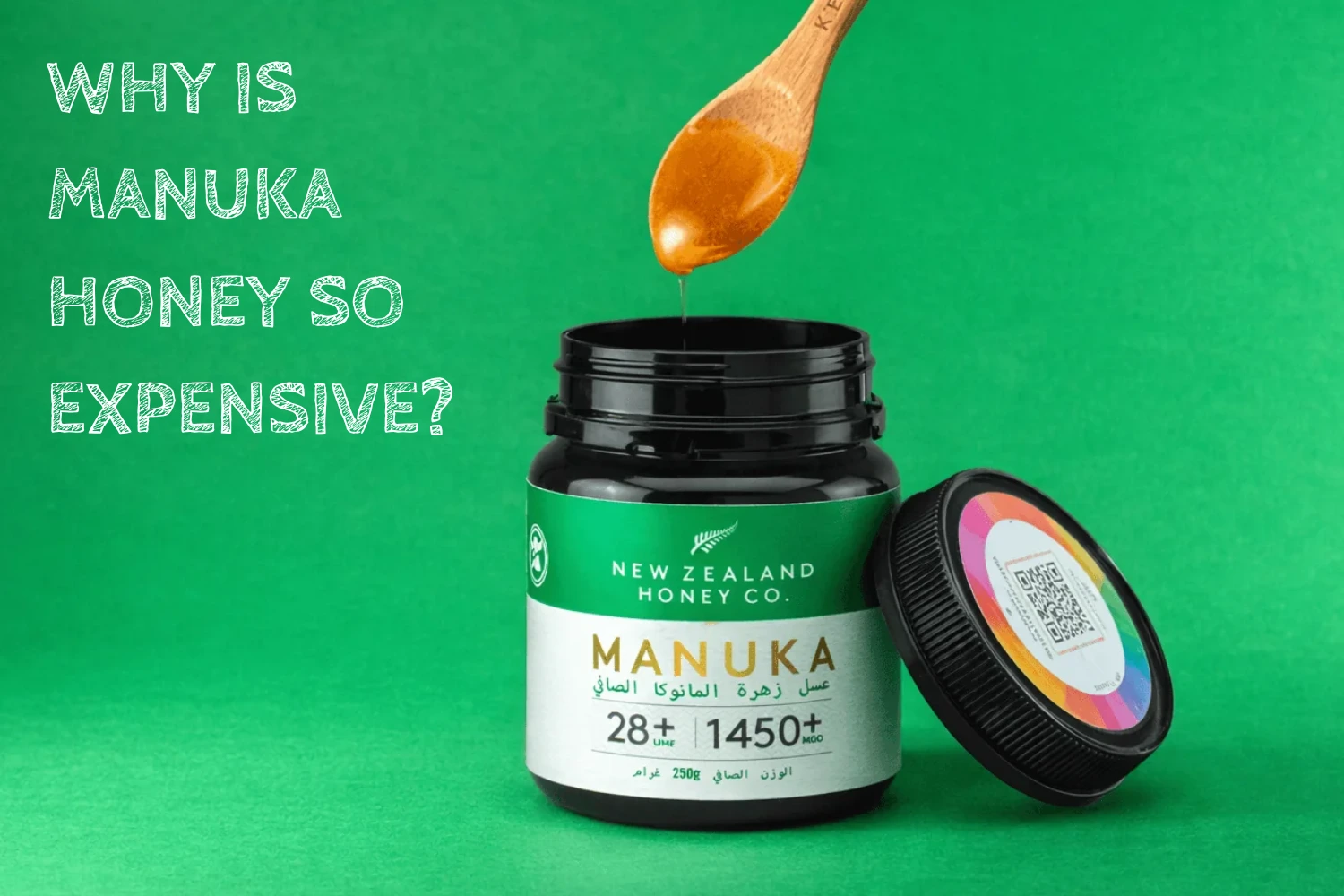
A Manuka hive yields roughly 15-52 kg per season, averaging about 23 kg, versus 60-100 kg for a standard clover hive. That gap, plus remote helicopter-accessed harvesting, mandatory lab testing, and a maturation period, explains the base cost. Brand differences in provenance and certification explain why the same grade still varies in price.
The Yield Problem: Why One Hive Makes So Little
Manuka hives produce a fraction of what a standard honey hive does. Industry data on New Zealand Manuka production puts the range at 15 to 52 kg per hive per season, averaging around 23 kg, compared to roughly 60 to 100 kg a year from a hive producing clover or other common honey types.
| Low | Average | High | |
|---|---|---|---|
| Manuka hive (per season) | 15 kg | 23 kg | 52 kg |
| Standard hive (per year) | 60 kg | not commonly cited | 100 kg |
That’s less than half the output for the same hive, same beekeeper effort, same season. Every jar of Manuka honey is already starting from a meaningfully smaller harvest than a jar of wildflower honey, before any grading or testing even enters the picture.
The Harvest Problem: Remote Terrain, Short Window
Manuka trees bloom for a genuinely short window, commonly cited around 4 to 6 weeks, often concentrated in December and January depending on the region and elevation. Miss it, and that hive’s entire season is gone.
The terrain compounds this. A lot of New Zealand’s Manuka grows in remote, rugged backcountry that trucks simply can’t reach, so hives are routinely flown in and out by helicopter, a detail confirmed across multiple New Zealand producers’ own harvest accounts, not a marketing exaggeration. That’s real fuel, pilot time, and logistics cost added before a single jar gets tested, on top of the short window beekeepers have to work within.
The Testing & Maturation Cost
Genuine Manuka honey isn’t ready to sell the moment it’s harvested. MGO, the compound the grading systems are built around, forms gradually from DHA, a precursor present in fresh Manuka nectar, as the honey matures in storage.
That maturation is commonly cited at around 12 to 18 months, with some producers citing up to 24 months for a batch to fully develop before testing and bottling. That means a producer’s money is tied up in aging inventory for well over a year before a high-grade jar can even be tested, let alone sold, a real carrying cost that a standard honey producer bottling within weeks of harvest never has to absorb.

Why the Same Grade Varies by Brand
Two jars can carry the identical UMF number and still cost noticeably different amounts, and that’s not automatically a sign one of them is wrong. Comvita and Manukora, for example, can both sell honey at a comparable MGO level while differing in harvest region, organic certification, packaging, and how much each brand has invested in traceability systems like batch-level QR tracking.
A remote, single-origin harvest location commands a premium over a broader sourcing footprint. Organic certification adds its own testing and compliance cost on top of the standard UMF or MGO testing. None of that means the cheaper of two similarly-graded jars is inferior, it may simply have invested less in the extras layered on top of the base grade.
What isn’t a legitimate reason for a lower price is a jar priced well below what any of these cost drivers would allow. That’s a different kind of cheap, worth real scrutiny rather than treating it as a lucky find.
Putting a Number On It
All of this explains the cost structure, but it doesn’t tell you what a fair number actually looks like for a specific grade. The full price guide by grade covers that directly, with real, current price bands rather than the general reasoning covered here.
FAQ
Is there a cheaper time of year to buy?
It’s plausible that pricing could shift around harvest and maturation timing, but this isn’t something confirmed with specific data, so treat any claim of a specific “best month to buy” with caution. The more reliable approach is comparing current listings against the price guide’s bands rather than timing a purchase around a season.
Is a more expensive jar at the same grade actually better?
Not necessarily. It often reflects added cost drivers like organic certification, a more remote single-origin harvest, or a bigger investment in traceability, not a difference in the tested potency itself. The UMF or MGO number is what verifies potency either way, regardless of price.
Does a lower price always mean lower quality?
No, but it depends on how much lower. A modest price difference between two certified jars at the same grade usually reflects the brand-level factors covered above. A price far below what testing, harvest, and maturation costs would realistically allow is a different situation, and a legitimate reason for suspicion rather than just a bargain.