
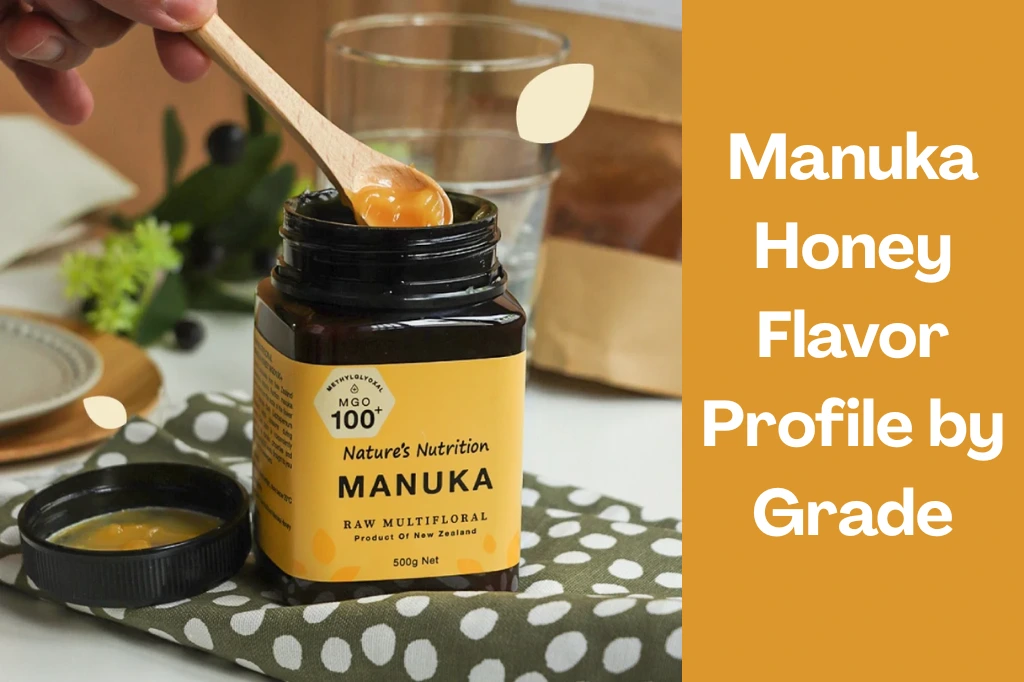
Manuka honey generally tastes light, mildly sweet, and subtly earthy at lower UMF grades, shifting toward a richer, more complex, sometimes caramel-like or bittersweet profile at higher grades. That’s a real tendency across the category, not a strict rule, batch variation means two jars at the same grade can still taste somewhat different.
How Flavor Generally Changes as Grade Rises
Across multiple brands’ own descriptions and independent reviews, a pattern often shows up: lower UMF or MGO grades tend to read lighter and sweeter, while higher grades are often described as richer, darker, more intense, and sometimes more complex or bittersweet. It’s worth being precise about what the grade number itself actually measures: a higher MGO number reflects a higher tested concentration of methylglyoxal, while a UMF rating incorporates several tested markers and quality factors together, including MGO, DHA, and leptosperin. Neither number guarantees a particular flavor, the progression above often appears alongside higher grades, but the grade itself is measuring potency and authenticity markers, not taste.
Genuine Manuka honey can taste earthy, herbal, medicinal, or slightly bitter, especially at higher grades, and that’s a normal characteristic, not a sign anything’s wrong with the jar. What’s actually worth paying attention to is a sour, fermented, or otherwise off smell, that’s a different thing and can point to spoilage rather than a normal grade-related trait.

The Lower Grades (UMF 5+ to 10+)
Entry-tier Manuka is often described as light, mildly sweet, and subtly earthy, closer to a good raw honey than to what people often expect from Manuka’s reputation, though some lower-grade Manuka still carries a noticeable earthy, herbal, or almost menthol-like note. Comvita’s own description of its UMF 5+ line emphasizes smoothness, mildness, and everyday use in tea, smoothies, and recipes rather than anything sharp or unusual.
To some tasters, a UMF 5+ or 10+ jar may seem closer to familiar raw honey than higher grades do, while others notice its earthy or herbal character clearly even at this end of the scale, personal sensitivity to these notes varies. That’s worth knowing if you’re trying Manuka for the first time specifically to taste what makes it distinct, the lower grades are a gentler introduction, not necessarily the most muted example of the flavor.
The Mid Grades (UMF 12+ to 16+)
This is where reviewers often describe a fuller, more distinct flavor emerging. Manukora’s MGO 600+ product, a high-activity product often discussed alongside mid-to-upper UMF grades (though MGO and UMF aren’t interchangeable labels, so treat this as an approximate association, not an exact equivalence), is described by the brand as having a “smooth, balanced profile” with light caramel and toffee notes and a deep floral character. General reviewer language in this tier often describes the honey as simply “full of flavor,” in a way that reads noticeably different from a standard supermarket honey.
This tier is a reasonable place to actually notice what people mean when they talk about Manuka’s character, without the more intense, sometimes polarizing edge the premium tiers can carry.
The Higher Grades (UMF 18+ and Up)
Brand descriptions often make the contrast most obvious at higher grades, where terms like dark, earthy, medicinal, caramel-like, and long-finishing show up more frequently. Manukora describes its MGO 850+ tier as having “rich caramel and toffee flavor with slightly medicinal notes,” and Egmont’s own material describes its higher UMF grades, UMF 15+ specifically, as rich, full-bodied, and velvety with deep caramel notes, similar terms, though the exact profile varies by brand and harvest.
This is where flavor most clearly diverges from a standard honey experience. Some tasters enjoy this stronger profile, while others find it medicinal or bitter, that’s a preference difference, not a measured fact about which is objectively better. If you haven’t tried Manuka before, jumping straight to a high grade means the first taste you get is the most intense version of it, not necessarily the most representative one.
Why Two Jars at the Same Grade Can Still Taste Different
Grade doesn’t fully control taste, and it’s worth being honest about that rather than implying a UMF number guarantees a specific flavor experience. Hive location, the specific nectar mix in a given harvest, and how long the honey’s been sitting before you open it can all shift flavor independent of what’s printed on the label.
That means a review describing “what UMF 15+ tastes like” is really describing one batch at one point in time, not a fixed, universal experience every UMF 15+ jar will deliver identically. The full culinary guide to cooking with it covers how this flavor progression translates into actual kitchen decisions, grade by grade.
FAQ
Is Manuka honey supposed to taste bitter?
It can be. Genuine Manuka may have earthy, herbal, medicinal, or slightly bitter notes, especially at higher grades, but bitterness isn’t required for authenticity, a mild jar isn’t automatically less genuine. A sour, alcoholic, or fermented smell or taste is more concerning, since that can indicate fermentation rather than a normal flavor variation.
Does flavor tell you anything about authenticity?
Not reliably on its own. Flavor is influenced by batch, storage, and floral source as much as by whether a jar is genuine, so a mild-tasting jar isn’t necessarily fake, and an intensely flavored one isn’t automatically more authentic. For UMF honey specifically, check the UMF trademark, the licensed producer, the license number and rating, and the batch details, taste can support a personal impression, but it can’t verify the label on its own.
Which grade should a first-timer try?
UMF 5+ to 10+ is a sensible starting range for many first-time buyers, though it’s a taste and budget recommendation, not a universal best choice. UMF 5+ is usually the gentler, less expensive introduction, while UMF 10+ offers a more recognizable Manuka character without the intensity and price of the premium grades.