
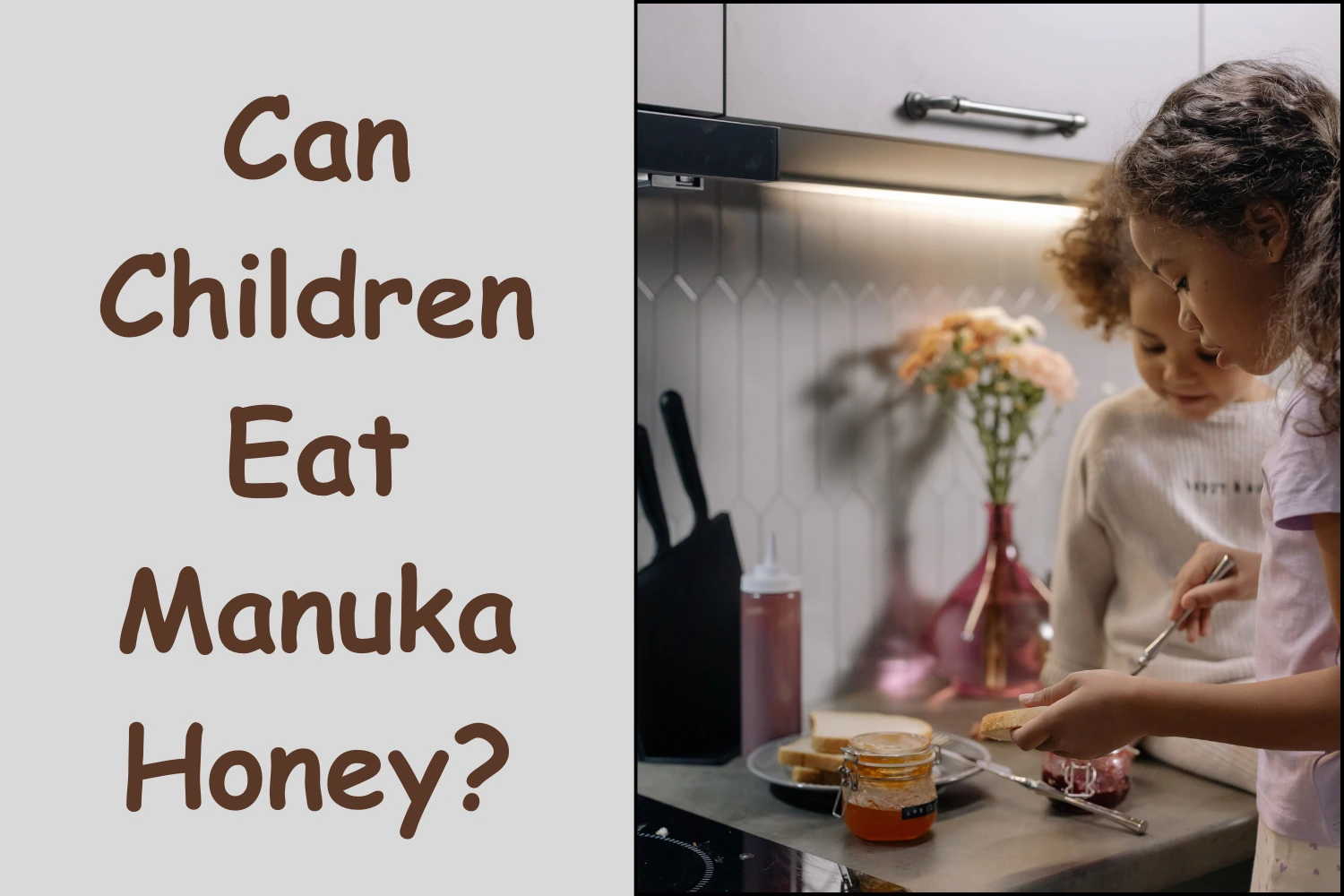
No honey of any kind, raw, pasteurized, baked, or in a pacifier, should be given to a child under 12 months old. This includes Manuka honey. The CDC advises that honey and honey-containing products, including pacifiers, should not be given to children younger than 12 months, due to the risk of infant botulism from Clostridium botulinum spores. The American Academy of Pediatrics likewise advises against honey before age 1. A higher UMF or MGO grade, higher price, or “purity” claim does not change that rule.
Why: Infant Botulism
Honey can contain spores of Clostridium botulinum, a bacterium found naturally in soil and dust worldwide. In most older children and adults, the mature gut microbiome and digestive environment generally prevent these spores from colonizing and producing toxin. An infant’s immature gut microbiome and digestive environment can allow ingested spores to germinate and produce toxin in the intestine instead, which is what causes infant botulism specifically.
Infant botulism is a real, tracked condition, not merely a theoretical concern. In the United States, CDC’s National Botulism Surveillance System reported 141 laboratory-confirmed infant botulism cases in 2017, 162 in 2018, 152 in 2019, 159 in 2020, and 181 in 2021, the highest annual count since the condition was first characterized in 1976. These are U.S. surveillance figures, so they shouldn’t be presented as global case counts, and the exact number can vary year to year, but the safety rule for infants hasn’t changed: no honey before 12 months.
Many infant botulism cases can’t be traced to one specific exposure. When a source is identified, environmental exposure to C. botulinum spores in soil and dust can be important. Honey is nevertheless a well-recognized avoidable exposure source, which is why the CDC’s honey rule remains essential even though honey isn’t the only possible source.
Does Cooking or Baking Make It Safe?
No. C. botulinum spores are highly heat-resistant. Reliable spore destruction generally requires commercial pressure-sterilization conditions, about 121°C (250°F) under pressure for several minutes, not ordinary baking or standard honey processing. A cookie, muffin, or other baked good containing honey is not safe for a baby under 12 months simply because it was baked.
Does Breastfeeding Pass the Risk?
No. A breastfeeding parent eating honey, Manuka included, does not pass botulinum spores or toxin to the baby through breast milk, the risk concerns direct ingestion by the infant. This is a genuinely reassuring distinction worth stating plainly, the rule applies to what’s given directly to the infant, not to what a breastfeeding parent eats themselves.
If an infant under 12 months may have eaten honey and develops constipation, poor feeding, a weak cry, reduced movement, drooping eyelids, or breathing difficulty, seek urgent medical care, these can be signs of infant botulism and shouldn’t wait for a routine appointment.
Is Manuka Different?
No. A high UMF or MGO grade does not make Manuka honey safe for infants. Spore presence can vary by batch, but the key point is that no grade, price, or purity claim eliminates that risk or removes it as a concern, and no marketing claim should be read as an exception to the under-12-months rule.
After 12 Months
After 12 months, honey is generally considered safe to introduce, because the risk of infant botulism from honey is no longer the concern it is during infancy, as the digestive system matures. Honey, Manuka included, becomes a reasonable addition at that point. General guidance once honey is safe to introduce covers common ways people use it and general amount context from that point forward, this page’s job stops at the safety floor itself.
FAQ
Can babies have Manuka honey?
No, not before 12 months old, for any reason, in any form. This applies to Manuka exactly like every other type of honey, there’s no grade or purity exception.
Why can’t babies have honey at all?
Honey can carry Clostridium botulinum spores, and an infant’s immature gut microbiome can allow those spores to germinate and produce toxin, causing infant botulism. A mature digestive system generally prevents this same colonization, which is why the rule is specifically tied to age, not honey quality.
Is Manuka honey different because it’s “purer”?
No. Spore risk isn’t something a higher grade, a cleaner sourcing story, or a higher price point filters out. Our full evidence-graded health hub and how our health content is reviewed explain this site’s broader approach to separating real evidence from marketing claims, and this is a clear example of a claim that doesn’t hold up.