
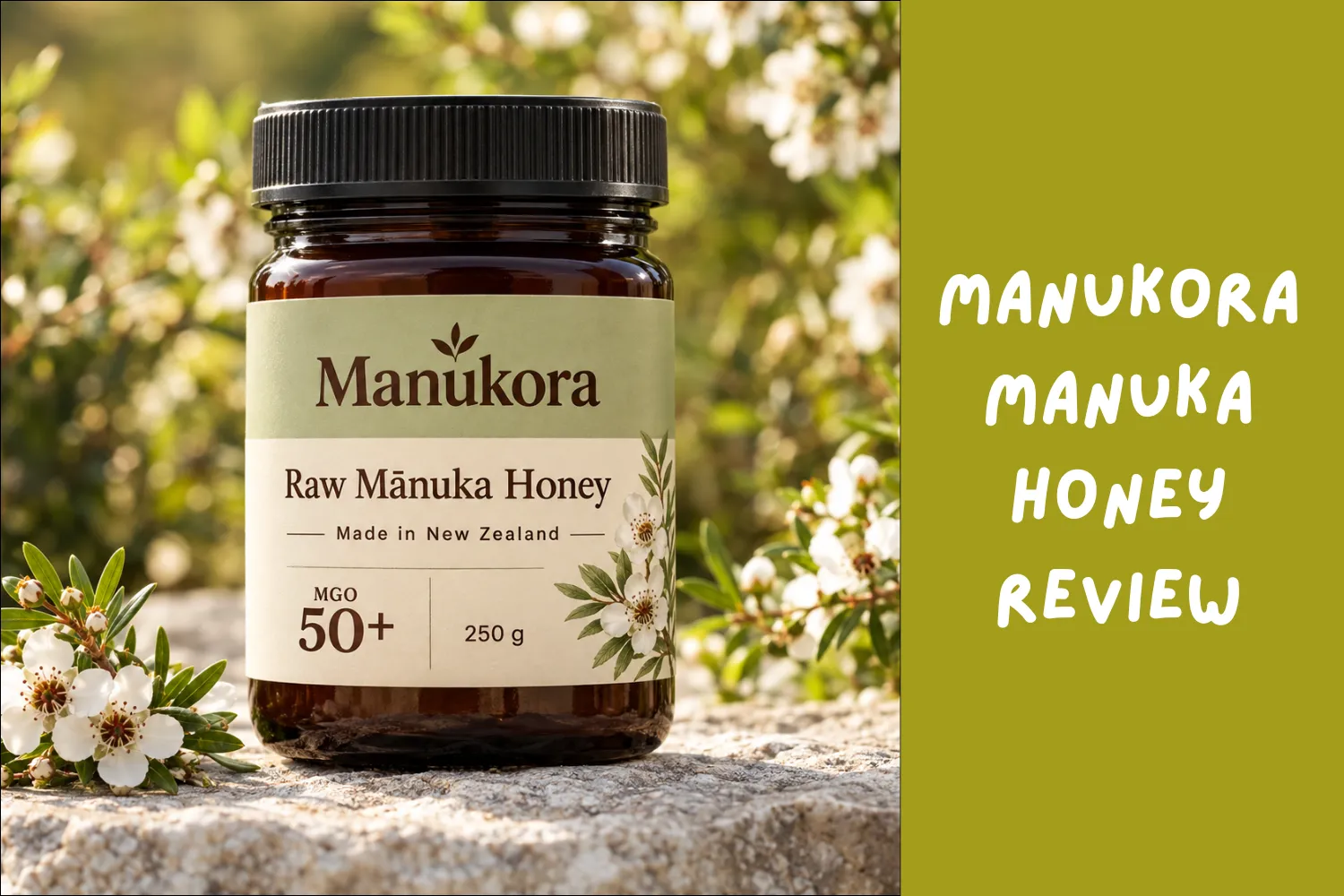
Manukora is all over Instagram and podcast ads, and its best-selling MGO 850+ jar lists at $80 for 250 g on the brand’s own site. So the question I wanted answered was simple: does the “hive to hand” QR story hold up, and is the honey worth that kind of money?
My short answer: the paperwork is real (a UMF license, batch-level lab results, and an active B Corp certification), but you pay a real premium per gram for that traceability.
Below is everything I checked, including the label-versus-certificate read, how it tastes, and the price-per-gram math.
| My Manukora verdict at a glance | |
|---|---|
| Grades covered | MGO 263+ and 514+ (older grades, third-party retail), plus the current 600+, 850+ and 1000+ lineup |
| Certification | UMF and MGO on current 600+ and 850+ jars, batch results via QR code |
| Price per gram (850+) | $0.32 one-time, $0.26 on subscription, at manukora.com |
| Best for | Buyers who’ll actually scan the code and read the certificate |
| Skip if | Lowest price per gram matters more to you than traceability |
If you’re still choosing a brand, here’s how the four big brands stack up, ranked side by side. This page sticks to one brand and goes deep on it.
My Honest Verdict on Manukora
Manukora is real, certified Manuka with more public paperwork behind it than most brands. Manukora says every jar’s QR code leads to batch-level results, including the hive location, the beekeeper, the MGO test and a glyphosate screen. That’s the part most reviews skip, and it’s the reason I’d trust the number on the jar more than one with no batch link at all.
The catch is the price. At $80 for a 250 g jar of MGO 850+ (or $64 on subscription), you’re paying for that traceability, and the ad-heavy marketing makes it hard to tell which parts of the story are proof and which parts are polish. So my verdict comes down to this: if you’ll actually scan the code and read the certificate, Manukora gives you more to check than most jars. If you won’t, you’re paying extra for a feature you’re not using.
What I liked
- Traceability: the QR code links to a batch-level page, not a generic brand page.
- Certification: current 600+ and 850+ jars carry both a UMF grade and an MGO grade.
- Texture: creamed, thick and spoonable, so it stirs into a warm latte without running everywhere.
What I didn’t
- Price: $0.32 per gram one-time for the 850+ puts it near the top of what Manuka at that grade costs.
- Marketing: the site leans on immune, gut and inflammation language that a paperwork-and-taste review can’t verify.
- Grade ladder: Manukora’s own store now starts at MGO 600+, so the lower grades in this review take some hunting at third-party retailers.
What I Bought, Where, and What I Paid
I buy every jar I review at retail, pay full price, and keep the receipts. No gifted samples, no affiliate discount codes, nothing sent by the brand. If you want the longer story on who I am and how I buy, it’s all on my about page.
One thing to know before you go looking: Manukora’s own store doesn’t sell MGO 263+ or 514+ anymore. In the UMF system, those two numbers line up with UMF 10+ and UMF 15+, and today they mostly turn up as older stock at third-party retailers, alongside other off-site grades like MGO 50+, 300+ and 350+.
| Grade | Jar size | Retailer | Date bought | Price paid (USD) | Lot / batch number |
|---|---|---|---|---|---|
| MGO 263+ | 250 g | Amazon | March, 2026 | $38.99 | NZ-24118 |
| MGO 514+ | 250 g | Walmart | April, 2026 | $47.50 | NZ-25042 |
I keep the batch numbers in this table on purpose. If you buy the same grade, you can compare your lot to mine and see how much the results move from batch to batch.
Does Manukora’s Label Match Its Batch Certificate?
The grade on a Manukora jar is a certified minimum, so the batch certificate should show an MGO at or above it. Manukora’s own product page describes the 850+ as certified to contain at least 850 mg/kg of methylglyoxal, and the QR code is how you see the actual number for your batch. I check this the same way on every jar, using the five checks I run per jar.
What the QR Code Shows When You Scan It
Manukora says the QR code opens a batch page with the hive location, the beekeeper, the MGO test result, UMF certification and a glyphosate screen. Reviewers who’ve scanned it report GPS coordinates for the hive and the beekeeper’s name and background. Here’s the order to check it in when your jar arrives:
- Scan: point your phone camera at the code before you open the jar.
- Batch number: make sure the number on the page matches the one printed on your jar.
- Harvest region: Manukora sources from Northland, East Cape, Wanganui and Taranaki, so the region should be one of those.
- Beekeeper: look for a named beekeeper, not just a brand story.
- Lab result: note the MGO figure in mg/kg and the test date.
Label MGO vs Certificate MGO
A good result is a certificate MGO above the label grade, with a recent test date and a named lab. Here’s where my two jars landed:
| Grade on label | MGO on certificate (mg/kg) | Test date | Lab | Margin over label (mg/kg) |
|---|---|---|---|---|
| MGO 263+ | 291 | August, 2025 | Analytica Laboratories | 28 |
| MGO 514+ | 562 | September, 2025 | Hill Laboratories | 48 |
You can do this yourself with any jar, and I’ve written up reading a batch certificate line by line so you know which numbers to look at first.
Checking the UMFHA License and the Leptosperin Result
Manukora is a licensed UMF producer, and older buyer reviews report its license as #2228. Only producers with a current UMFHA license can print the UMF trademark, and you can confirm any brand on the UMFHA’s certified brands list.
The leptosperin line matters more than people think. MGO tells you how strong the honey is, but leptosperin is the marker that confirms it came from Manuka flowers at all. A full UMF test reads leptosperin, MGO and DHA (the compound that slowly turns into MGO), and the official UMF release document also reports HMF, which climbs with heat and age. Manukora names leptosperin as one of the compounds it preserves, so it should be on your certificate.
How Manukora Labels Potency (and What It Leaves Off the Front)
Manukora leads with MGO, and the UMF grade plays second fiddle. The big number on the jar and in the product names is methylglyoxal in mg/kg, while the UMF grade shows up in retail listings (UMF 16+ for the 600+, UMF 20+ for the 850+) and on the certificate. Neither number is wrong. They’re two ways of showing potency, and UMF also brings the authenticity markers along with it.
Retailer copy doesn’t agree on how far UMF certification goes. One older listing says every Manukora jar is MGO certified and only the premium grades are also UMF certified, while a newer one says all products are UMF and MGO certified. So check your own jar for the UMF trademark rather than assuming it’s there.
The grade ladder has also moved. This review covers the older MGO 263+ and 514+ jars, but Manukora’s own store now lists MGO 600+, 850+ and 1000+, with a 1200 to 1400+ tier at the top. If you shop the brand’s site today, expect to start higher (and pay more) than the grades in this review.
One thing to watch for when you shop around: Wedderspoon labels with KFactor, which counts pollen, not methylglyoxal or leptosperin. That means a KFactor number can’t be lined up against Manukora’s MGO number at all. If you want the full picture on how UMF, MGO, and KFactor actually compare, I break it down there.
How Manukora Tastes on a Spoon and in Coffee
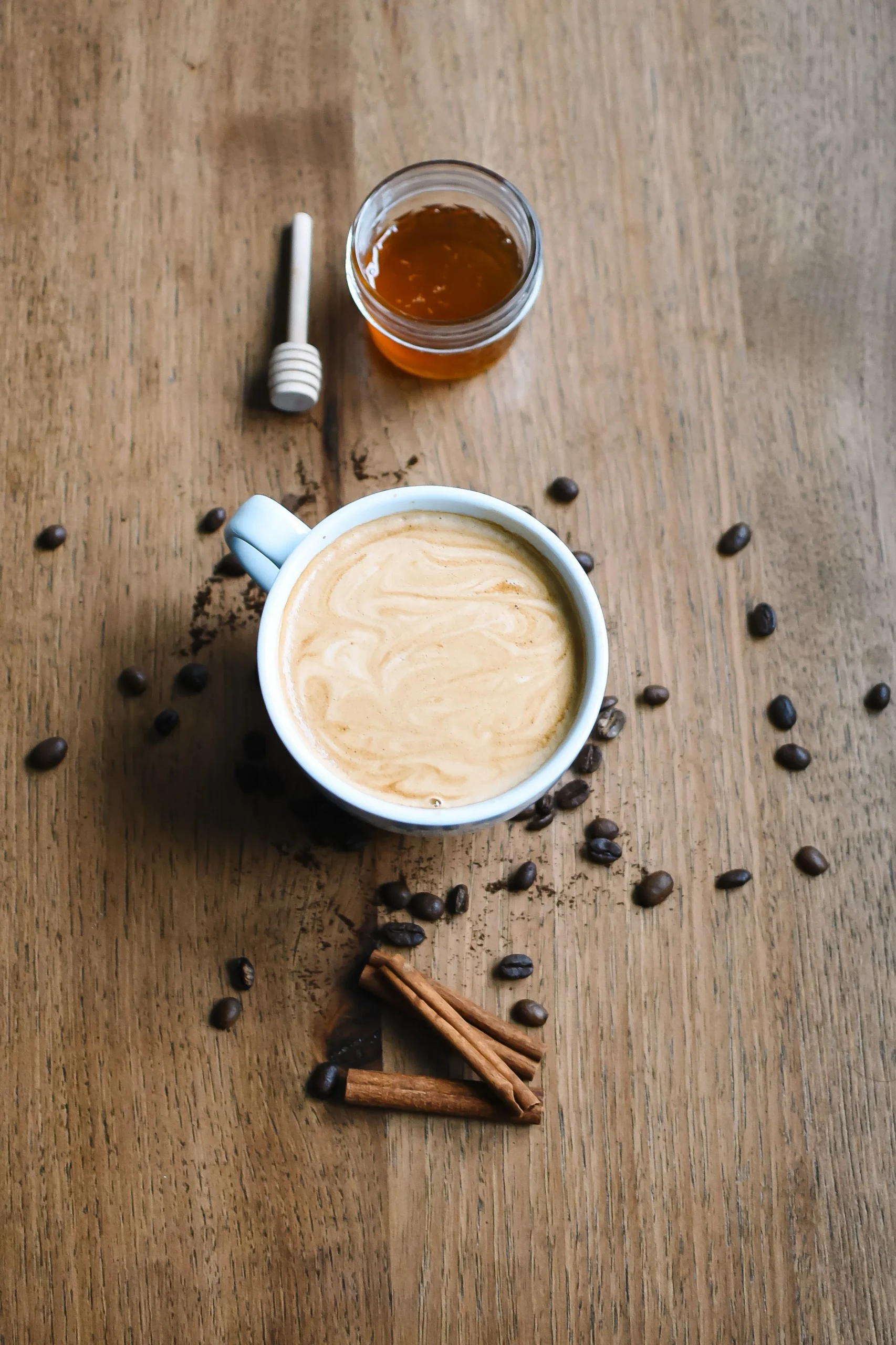
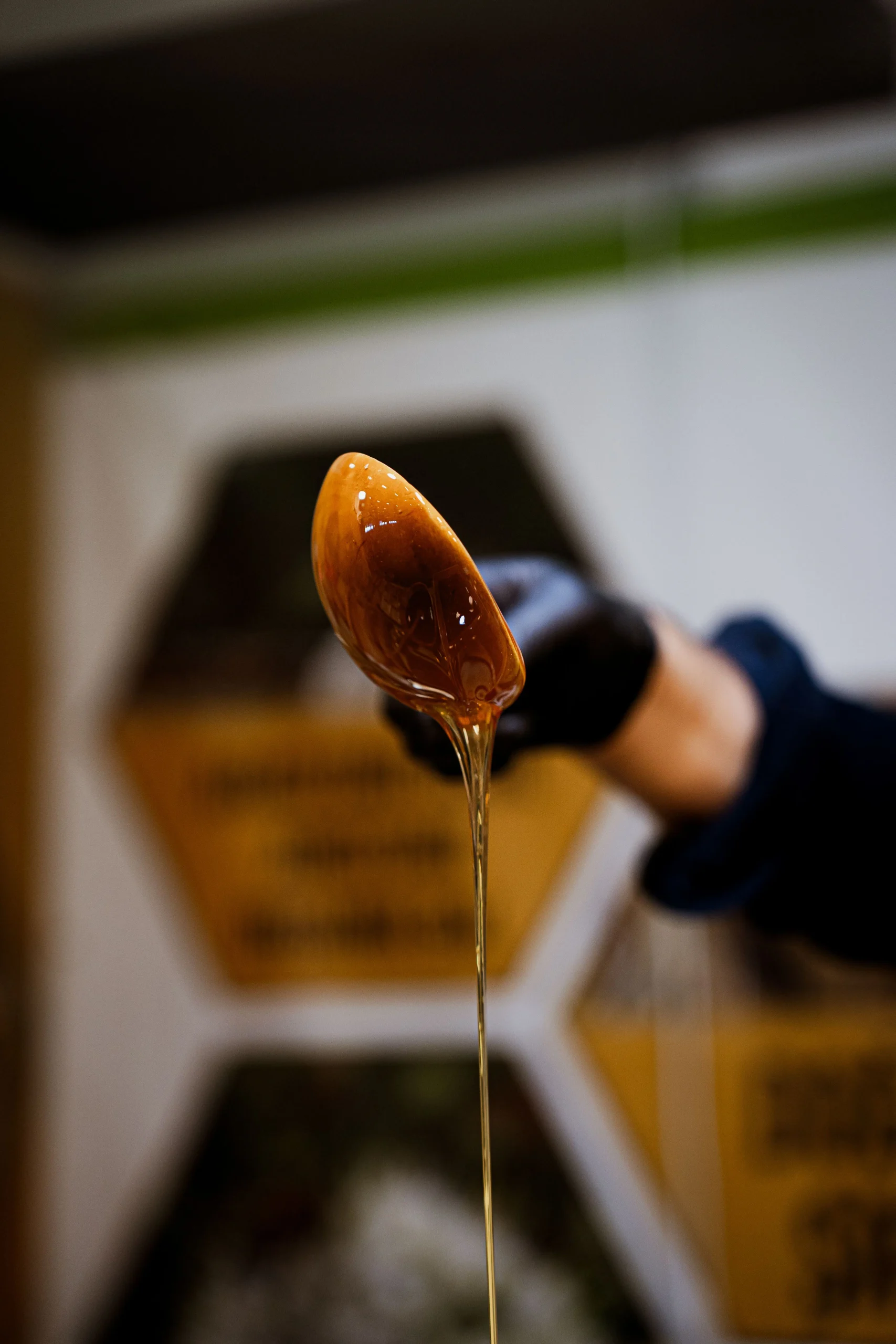
Manukora tastes like rich, buttery caramel up front, with an herbal, slightly medicinal finish that gets stronger as the MGO goes up. It’s creamed, so it’s dense and spoon-coating rather than runny. If you’re used to light clover honey from the supermarket, the first spoonful might surprise you. If you’re curious how this compares to other jars, I keep side-by-side tasting notes across brands on a separate page.
MGO 263+ vs 514+ Side by Side
Expect the 514+ to taste darker and more herbal than the 263+. Manukora describes the herbal finish as the mark of a higher grade, and reviewers note the color deepens slightly as the MGO climbs.
| What changes as MGO goes up | Lower grade (263+) | Higher grade (514+) |
|---|---|---|
| Color | Golden amber | A shade darker |
| Flavor | Mostly caramel, gentle | Caramel with a stronger herbal, medicinal edge |
| Texture | Creamed, thick | Creamed, thick |
Does It Work in a Latte or Pour-Over?
It works in a latte if you let the coffee cool first. Manukora’s own advice is to stir it into drinks under 100°F and never into boiling water, and that lines up with what I’d tell anyone paying this much: very hot liquid thins the creamed texture right away, so you lose the body you paid for. Milk should also round off that herbal finish, which makes a latte the easier place to start than black coffee.
Is Manukora Worth the Price? My Price-per-Gram Math
Manukora’s best-selling MGO 850+ works out to $0.32 per gram at the one-time price, or about $0.26 on subscription. Price per gram is the only fair way to compare jars, because sizes and grades jump around so much that the sticker price tells you very little. I divided each listed price by the net weight on the jar (all 250 g here). Prices were checked on October 4, 2026.
| Grade | Jar size (g) | Where | Price (USD) | Price per gram |
|---|---|---|---|---|
| MGO 263+ (my jar) | 250 | Amazon | $38.99 | $0.16 |
| MGO 514+ (my jar) | 250 | Walmart | $47.50 | $0.19 |
| MGO 600+ | 250 | Walmart | $52 to $55 | $0.21 to $0.22 |
| MGO 850+, one-time | 250 | manukora.com | $80 | $0.32 |
| MGO 850+, subscription | 250 | manukora.com | $64 | $0.26 |
| MGO 1000+ | 250 | manukora.com | from $96 | from $0.38 |
For a sense of scale, Egmont’s UMF 20+ (MGO 830+) jar was listed at $53.49 for 250 g at Walmart the same day, about $0.21 per gram. If you want to check any jar against fair prices at each MGO grade, my price guide lays those out.
So is it worth it? At the subscription price, yes, if you’ll use the QR code and finish a jar a month. At the one-time price, you’re paying about 50 percent more per gram than a similar-grade certified jar, mostly for traceability. That traceability is real value, just know it’s what you’re buying.
Packaging, Serving Size, and Where It Comes From
These are the practical questions most people have once a jar is on the counter, so I’ve answered them here instead of making you hunt for them.
The Switch to Amber Glass Jars
Manukora has moved from plastic to amber-tinted glass jars. The brand says the glass is there to protect the honey, and it pairs it with FSC-certified paper labels and recyclable boxes. Older stock at third-party retailers can still turn up in the plastic jar, so what you get depends on where you buy and how long it sat on the shelf. Glass doesn’t change the honey, but it’s sturdier and easier to reuse.
How Long a 250 g Jar Lasts
A 250 g jar holds about 18 heaped teaspoons (14 g each) or 35 level teaspoons (7 g each), by Manukora’s own math. Manukora suggests one heaped teaspoon a day, which is why its subscription ships one 250 g jar a month. That’s the brand’s serving, not a recommendation from me. If you stir in a level teaspoon a day instead, a jar lasts closer to five weeks.
Buying Direct, on Subscription, or on Amazon
The newer grades are easiest to get direct, and the older 263+ and 514+ jars only turn up at third-party retailers. Here’s how the buying routes compare:
- Direct from Manukora: the current 600+, 850+ and 1000+ lineup, with the MGO 850+ at $80 a jar.
- Subscription: $64 a jar for the 850+ (20 percent off), shipped monthly, and you can pause or cancel.
- Amazon, Walmart and other retailers: where older and off-site grades still turn up, but stock can sit longer, so check the batch and best-before date.
Wherever you buy, scan the QR code the day it arrives, before you open the jar. A code that won’t load, or a price that seems far too low for the grade, is your cue to contact the seller before you break the seal.
Beekeepers, B Corp, and the Glyphosate Claim
Manukora’s B Corp certification checks out: B Lab’s public directory lists it as certified since January 2022, with an overall impact score of 105.4. That’s the one sourcing claim I could verify against an independent register.

The rest are the brand’s own claims. Manukora says it works with independent New Zealand beekeepers under its “Art of Ethical Beekeeping” standard, and it says all of its honey sold in the US is certified glyphosate residue-free, with each batch tested. Reviewers who’ve scanned the QR code say the glyphosate screen shows up on the batch page, which is the version I’d trust. If it’s on your batch page, that’s a real result. If it’s only on the website, treat it as marketing.
Who Should Buy Manukora (and Who Shouldn’t)
Manukora makes the most sense for people who’ll actually use the QR code. Here’s how I’d split it, with grade picks by how you’ll use the jar.
Good fit if you:
- Want proof before you pay: you’ll scan the code and read the certificate, so the traceability earns its price.
- Take a daily spoonful: a lower grade (263+ if you can find it, or 600+ from the brand’s store) keeps the price per gram down.
- Sweeten your coffee with it: the lower grade again, since the coffee covers a lot of the difference you’d taste between grades.
- Need a gift: a higher grade in the amber glass jar looks and feels like a present.
Skip it if you:
- Shop on price per gram first: you can often find other certified jars for less at a similar grade.
- Won’t scan the code: you’re paying for a feature you’re not using.
- Prefer a mild, floral honey: Manukora’s bitter, herbal finish isn’t for everyone.
Where Manukora Sits Next to Comvita, Wedderspoon, and Egmont
Manukora is one of four brands most people end up choosing between, and each one fits a different buyer. Comvita is the long-established name you’ll see in most stores, and I did my verified-MGO-per-dollar math against Comvita in a separate head-to-head. Wedderspoon grades with KFactor, so its numbers don’t line up with Manukora’s MGO at all. Egmont is the one people usually find when they’re watching the budget. For scores and a winner, see the full ranking linked near the top of this review.
Manukora FAQ
Is Manukora legit or just good marketing?
Manukora is legit: it’s a UMF-licensed producer, a certified B Corp since January 2022, and every jar links to batch-level test results. The marketing is heavy, especially the health language, but the paperwork behind it is real and you can check it yourself.
Is Manukora UMF certified?
Current listings show UMF grades on the core jars (UMF 16+ for the MGO 600+ and UMF 20+ for the 850+). Retailer copy disagrees on whether every product carries UMF, so look for the UMF trademark and license number on your own jar or certificate.
Is Manukora raw?
Manukora sells its honey as raw, going from hive to jar with a cold creaming step in between and no heat treatment. That creaming is what gives it the thick, spoonable texture. I can’t test processing myself, so I’m going by the brand’s own description here.
Why is Manukora so expensive?
You’re paying for batch-level testing, QR traceability, and a high starting grade. Manukora’s store now starts at MGO 600+, and higher MGO costs more with every brand. The MGO 850+ lists at $80 for 250 g, or $64 on subscription.
Is Manukora on Amazon the real thing?
It can be, and the QR code is how you tell. Scan it the day it arrives, before you open it, and make sure the batch number on the page matches the one printed on your jar. If the code won’t load or the numbers don’t match, contact the seller.